
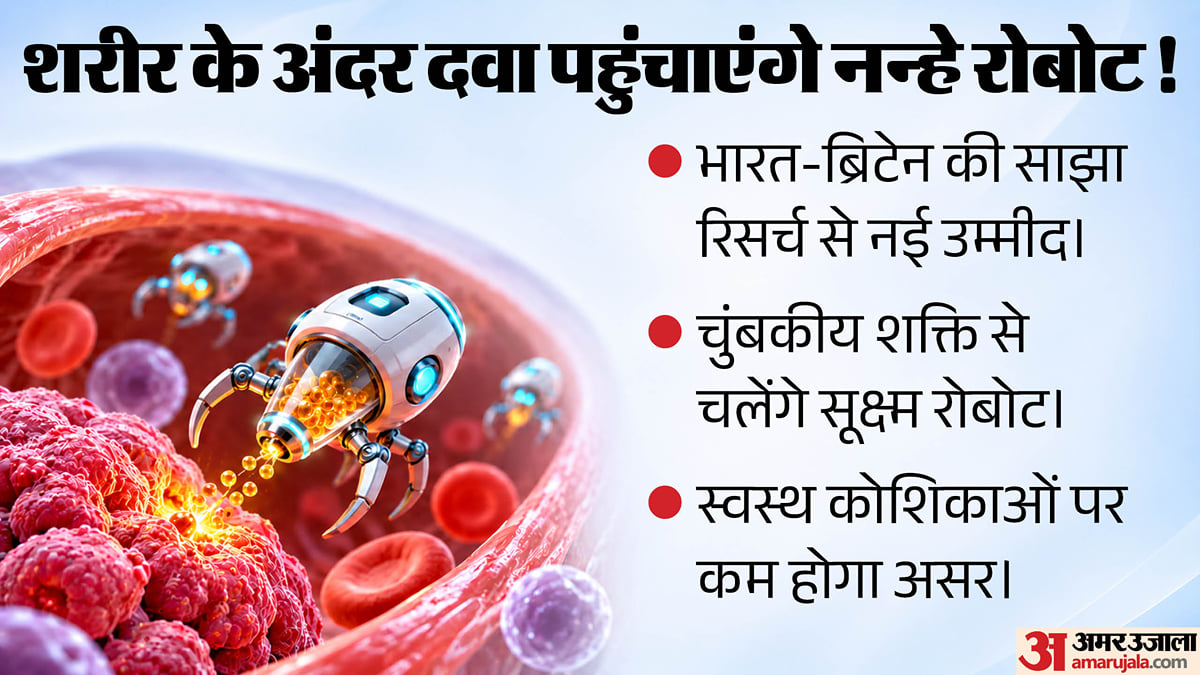
India and UK scientists join forces on magnetic nanorobots for drug delivery
In brief
Imperial College London and the Indian Institute of Science in Bengaluru are developing tiny magnetic robots to deliver drugs to specific parts of the body. The plan is to build artificial cells fitted with magnetic motors that an external magnet can guide. The work is at an early stage and needs further testing.
The project is an early-stage effort to make drug delivery more targeted, which could matter for future treatments if testing succeeds.
What we know 6
Scientists at Imperial College London and the Indian Institute of Science (IISc) in Bengaluru are working together on the project.
Imperial College London announced the partnership in the same week as the report.
The project aims to create artificial cells fitted with tiny magnetic motors that an external magnetic field can steer through difficult environments.
Prof Ambarish Ghosh's team at IISc works on magnetic nanorobots, which the researchers say can move through blood, tissues and living cells.
The project is funded through Imperial College London's India Connect Fund.
The report says the approach could lower the doses needed and reduce side effects by delivering drugs directly to affected tissue.
How each outlet told it 1
How we got here
Imperial College London is established in London.
The Indian Institute of Science is founded in Bengaluru.
Imperial College London announces its partnership with IISc on magnetic nanorobots and artificial cells.
What to watch
Results from early laboratory testing of the magnetic nanorobots and artificial cells.
Further testing needed before any medical use of the technology.
Training and research-sharing programmes for students and researchers in both countries.